Free Drain Cleaning with Jolly Home Plan


4.8 Google Rating
Why Hard Water Causes Plumbing Issues in Many Northern Kentucky Homes

Northern Kentucky is known for its rolling hills and beautiful river views, but beneath the surface, the region’s geography presents a significant challenge for homeowners. The water flowing through the pipes in Kenton, Campbell, and Boone counties is notoriously “hard,” meaning it is packed with dissolved minerals like calcium and magnesium. While these minerals are generally safe for consumption, they are incredibly destructive to your home’s plumbing system over time.
In this blog, we will examine why hard water is so prevalent in our region and the specific ways it can damage your home’s infrastructure. By understanding the “hidden” chemistry of your water, you can take the necessary steps to protect your pipes, your appliances, and your wallet from the long-term effects of Northern Kentucky’s hard water.
The Mineral Makeup: Why Our Region Faces Hard Water Challenges
The water in Northern Kentucky does not start out hard; it becomes that way as it travels through our local environment. Our region sits on a massive limestone foundation, a sedimentary rock composed primarily of calcium carbonate. As rainwater filters through the soil and into our groundwater supplies or flows into the Ohio River, it naturally dissolves small amounts of this rock. By the time water reaches your kitchen sink, it has become a mineral-rich solution ready to leave deposits on every surface it touches.
This geological reality makes hard water a near-universal experience for NKY residents. Effective plumbing maintenance begins with awareness of local conditions and how they influence your system’s lifespan. To understand why our water is so “rocky,” consider these environmental factors:
- Abundant Limestone Bedrock: Navigating the fact that most of the Bluegrass region is built upon ancient, mineral-rich sea beds.
- The Ohio River Basin: Pulling water from a source that collects runoff from thousands of miles of limestone-heavy terrain.
- Groundwater Percolation: Absorbing minerals as water moves slowly through underground aquifers before being pumped to your home.
- High Calcium Carbonate Levels: Measuring the “grains per gallon” in local water, which often falls into the “very hard” category.
- Solubility and Temperature: Recognizing that as water gets warmer, these dissolved minerals are more likely to fall out of the solution and form solids.
- Regional Soil Composition: Filtering water through clay and silt that are often packed with magnesium and iron.
- Municipal Treatment Limits: Understanding that most city water plants are designed for safety and clarity rather than total mineral removal.
This mineral makeup creates a constant buildup cycle. Every time you turn on a tap, you are essentially moving liquid rock through your pipes. Without intervention, these minerals will eventually settle and cause trouble.
Limescale Buildup: The Silent Clog Inside Your Pipes
While a standard clog usually consists of hair or food waste, hard-water clogs are much more permanent. Limescale, also known as calcium scale, is a rock-hard deposit that forms on the interior walls of your plumbing. Over several years, this scale continues to layer upon itself, effectively narrowing the path for water to travel. Unlike a soft clog that can be flushed away with a plunger, limescale bonds to the pipe material, whether you have modern copper or older galvanized steel.
This restriction of flow is a primary cause of low water pressure in many Northern Kentucky homes. Proactive plumbing maintenance often involves identifying this buildup before it completely chokes your system. If you notice that your water flow is becoming weaker over time, your pipes may be suffering from these specific scale-related issues:
- Internal Diameter Restriction: Reducing the “useful” size of your pipes, which forces your system to work harder to deliver the same amount of water.
- Rough Pipe Surfaces: Create jagged interior texture that traps other debris, such as soap scum and hair, leading to frequent clogs.
- Valve Seizure: Depositing minerals inside the moving parts of your main shut-off valve, making it impossible to turn off the water in an emergency.
- Pinole Leak Development: Trapping moisture and oxygen against the metal walls of the pipe, which can lead to localized corrosion and small leaks.
- Noisy Pipes: Causing “whistling” or “knocking” sounds as water is forced through a restricted and uneven passage at high speeds.
- Degraded Water Quality: Allowing small “flakes” of calcium to break off into your water supply, which can clog aerators and affect the taste.
- Increased Friction Loss: Raising the energy required to pump water through the home, which can subtly increase the workload on your well pump or municipal supply.
Limescale is a cumulative problem. By the time you notice the symptoms at your faucet, the damage inside your walls is often quite extensive. Addressing the mineral content of your water is the only way to stop this silent “hardening of the arteries” in your plumbing system.
Appliances Under Attack: The Cost of Mineral Scouring
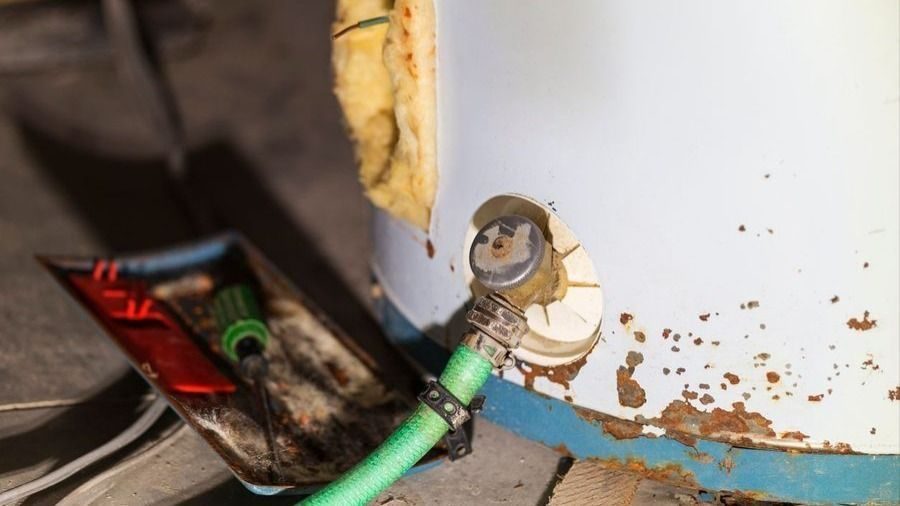
The most expensive casualties of Northern Kentucky’s hard water are your major appliances. Water heaters, dishwashers, and washing machines are all designed to work with clean, soft water. When they are fed a steady diet of liquid limestone, their internal components begin to fail prematurely. The heating elements in these machines are particularly vulnerable: as the minerals settle out of the hot water, they form an insulating crust around the heating rods. This forces the appliance to run longer and hotter to achieve the same result, leading to massive energy waste and eventual mechanical burnout.
In a typical NKY household, an unprotected water heater may lose up to 25 percent of its efficiency in just a few years due to scale buildup. Consistent plumbing maintenance must include a plan to flush these appliances and manage the incoming water quality. To see if your appliances are losing the battle against hard water, look for these common warning signs:
- Popping Sounds from the Water Heater: Hearing a loud “rumble” or “pop” when the heater is running, which is caused by steam bubbles escaping through layers of sediment at the bottom of the tank.
- White Film on Glassware: Finding that your dishes come out of the dishwasher looking cloudy or “spotted” even after a full cleaning cycle.
- Stiff Laundry: Noticing that your clothes and towels feel scratchy and stiff because mineral deposits are trapped in the fabric fibers.
- Reduced Hot Water Capacity: Discovering that your hot water runs out much faster than it used to because the bottom of the tank is filled with several inches of solid mineral “sand.”
- Frequent Pump Failures: Replacing dishwasher or washing machine pumps every few years because the abrasive minerals have ground down the internal seals.
- Clogged Spray Arms: Finding that the tiny holes in your dishwasher’s rotating arms are blocked by white, crusty deposits.
- Slow Filling Machines: Noticing that it takes significantly longer for your washing machine to fill up because the inlet screens are choked with sediment.
By the time an appliance fails, the cost of replacement is far higher than the cost of prevention. Managing the mineral content at the point where water enters your home is the best way to ensure your expensive machines reach their full expected lifespan.
Fixture Fatigue: Corrosion and Aesthetic Damage
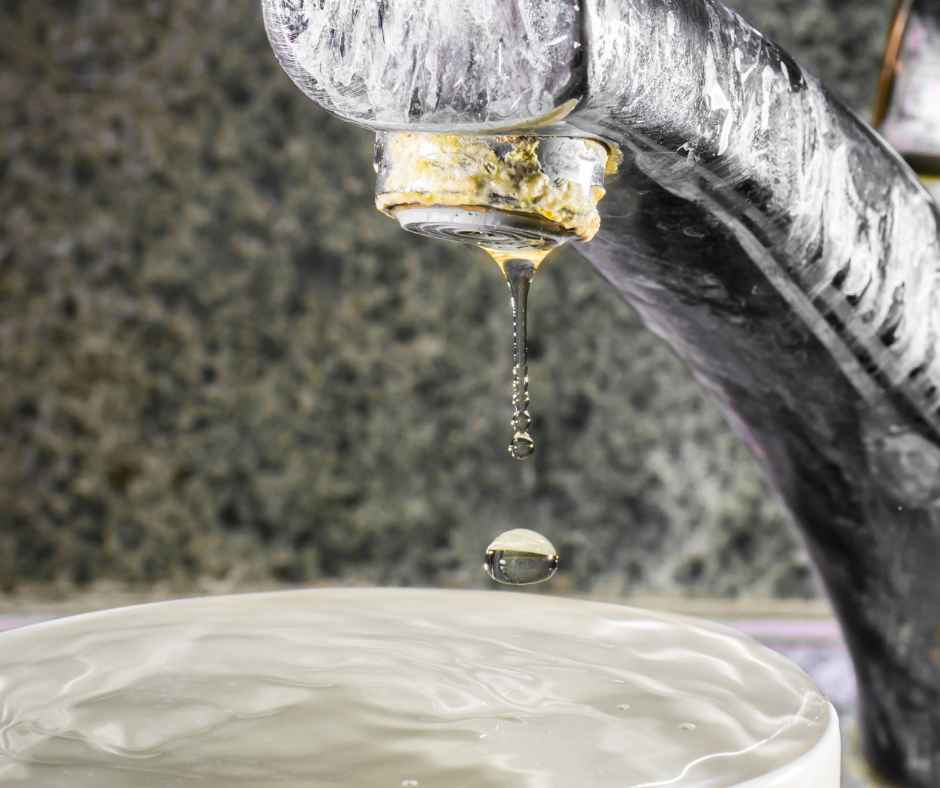
The most visible impact of hard water in Northern Kentucky occurs at your fixtures. Faucets, showerheads, and handles are the “face” of your plumbing system and bear the brunt of mineral buildup. When hard water evaporates on a surface, it leaves behind the calcium and magnesium it was carrying. This creates the stubborn white crust known as “limescale” that ruins the finish of your high-end fixtures. Beyond the visual annoyance, these minerals act as abrasives that slowly grind away at the internal rubber washers and O-rings that keep your faucets from leaking.
Even the most thorough cleaning routine cannot stop the damage that happens inside the fixture. Incorporating a check of these components into your plumbing maintenance schedule is vital for preventing drips and water waste. To determine if your fixtures are suffering from mineral-induced fatigue, watch for these specific issues:
- Restricted Shower Spray: Noticing that water shoots out in odd directions or that half of the holes in your showerhead are completely blocked by white grit.
- Difficult Handle Operation: Feeling a “gritty” or “tight” sensation when turning a faucet handle because minerals have entered the cartridge or valve seat.
- Constant Drips: Discovering that your faucet continues to leak even after you have turned it off, which indicates that mineral deposits have pitted the internal seals.
- Pitting of Finishes: Finding that the chrome or brushed nickel finish on your fixtures is bubbling or peeling away due to the corrosive nature of long-term mineral contact.
- Clogged Aerators: Having to unscrew and clean the small mesh screens at the end of your faucets every few weeks to remove accumulated “rocks.”
- Toilet Tank Component Failure: Replacing the flapper or fill valve frequently because the rubber has become brittle and “crusty” from the hard water.
- Stubborn Tub Rings: Fighting a constant battle against gray or white “scum” lines on the walls of your tub and shower that refuse to wash away with standard soap.
While you can soak a showerhead in vinegar to temporarily clear the holes, this is a reactive fix. The only way to stop the “scouring” effect of hard water is to treat the water before it reaches your expensive fixtures.
Sustainable Solutions with Jolly
Solving the hard-water crisis in Northern Kentucky requires a move away from temporary fixes toward a systemic solution. At Jolly, Drains, Heating & Air, we specialize in water quality audits that tell you exactly what is in your water. Whether you are on municipal water in Covington or a private well in a more rural part of Boone County, we can design a filtration or softening system that neutralizes these minerals before they can do damage.
A professional plumbing maintenance assessment of your water quality provides several long-term benefits:
- Custom Water Softener Installation: Selecting a system that is sized correctly for your family’s water usage and the specific hardness levels of your neighborhood.
- Salt-Free Conditioning Options: Exploring modern alternatives for homeowners who want to prevent scale buildup without the use of traditional salt-based systems.
- Whole-House Filtration: Removing not just minerals, but also chlorine and other chemicals that can affect the taste and safety of your water.
Protect Your Pipes and Your Home Today
Hard water is an inevitable part of living in the Ohio River Valley, but its destructive effects on your plumbing are not. By understanding how calcium and magnesium attack your pipes, appliances, and fixtures, you can take a proactive stance.
Jolly, Drains, Heating & Air is your local expert in Northern Kentucky for everything from leak repair to advanced water treatment. Don’t let “liquid rock” ruin your home’s infrastructure. Contact us today to schedule a comprehensive water quality test and learn how we can help you achieve the soft, clean water your home deserves.
FAQ: Northern Kentucky Hard Water
Is it safe to drink hard water?
Yes, hard water is generally safe to drink and can even provide a small amount of your daily calcium and magnesium requirements. The primary concern is the damage it does to your home’s physical systems.
Can I use a chemical cleaner to remove scale from my pipes?
We do not recommend pouring harsh acids or “scale removers” down your drains. These chemicals can damage older pipes and are often ineffective against the thick, rock-hard buildup found in NKY homes.
How do I know if I need a water softener?
If you see white spots on your dishes, feel like your soap won’t lather, or notice a white crust on your faucets, you likely have high hardness levels and would benefit from a softener.
Does a water softener affect my plumbing warranty?
Actually, many appliance manufacturers recommend (or even require) water treatment in hard-water areas to keep the warranty valid, as they know mineral damage is a leading cause of failure.
How long does a water softener last?
A high-quality, professionally maintained water softener typically lasts between 10 and 15 years in our region.


Call Us. We’ll Take Care of It.
Heating, air, plumbing, electric, drains, or water cleanup, we’ll figure out what’s going on and get it handled without making it complicated